
Job Hunting Stress Perth: When Your Experience Isn't Seen
When every ad asks for local experience and applications go unanswered, here's how to protect your mood and confidence while job hunting in Perth.

It's Saturday night. After a long week you were meant to finally sit down together, but the same argument came back: the rent that's gone up again, who's working harder, and who feels unseen. Now one of you is in the bedroom and the other is on the couch scrolling. If you've ever searched "Iranian couples counselling Sydney" after a night like that, you're far from the only one. Conflict between Iranian couples here rarely starts from something strange. It usually comes from the everyday pressure of living in an expensive city, slowly seeping into the relationship. This article looks at where the repeat arguments come from, what you can try this week, and when it's time for couples therapy.
Every relationship has its own story, but a few pressures show up again and again in migrant couples. Naming them helps you see that you're both carrying the same load, instead of blaming each other.
Sydney is beautiful and expensive. Crowded rental inspections, rejected applications and moving house again and again keep both of you on edge. When money is the main worry, the fights are rarely about money itself. They're about small things: the grocery bill, a takeaway order, a light left on. Behind each one sits a bigger question: "Are we going to make it?"
Often one partner finds a job sooner, because of language, field or plain luck. Roles shift. The one still looking may feel dependent and like a burden; the one working may feel they're carrying everything and nobody notices how tired they are. If one of you still holds the old picture of who the "breadwinner" should be, that shift is even harder to absorb.
Long commutes, irregular shifts and second jobs shrink your shared time to a few tired minutes at night, and those minutes go on bills and next week's schedule. A relationship that is only managed, never lived, slowly cools.
Look closely and you'll probably notice your arguments look different on the surface but follow the same path. Common topics for Iranian couples abroad include:
A familiar pattern: one partner wants to talk, and the more they push, the more the other goes quiet and pulls away. The first feels ignored; the second feels cornered. Neither is the villain. Both are protecting the relationship in their own way, but together they create a loop.
Taarof, the Persian habit of polite deflection, can make it worse. Saying "no, it's fine" when it isn't simply postpones the hurt until it comes back bigger.
Don't discuss money mid-argument or when you're both exhausted. Once a week, over tea, go through spending and worries calmly. When money has a planned place, it spills into every small disagreement less often.
"You never help" puts your partner on the defensive. "I'm really tired today and I need you to make dinner" invites cooperation. It sounds like a small change, but it shifts the tone of the whole conversation.
When voices rise, either of you can ask for a pause, say twenty minutes, and then you come back. Coming back is the important part. A pause that turns into days of silent treatment becomes a new wound of its own.
The partner without a job is probably filling days with applications, paperwork and the house. The partner who works is probably carrying tiredness they don't mention. A simple "I saw how hard you worked today" does more than you'd expect.
A walk by the beach on a summer evening, or a slow weekend breakfast, with no talk of bills or work. These moments remind you why you started this together.
Couples therapy isn't only a last resort. If you recognise several of these, talking to a professional can help:
Couples therapy isn't about declaring a winner. A therapist helps you see the pattern, hear what's hiding under the anger, and find a new way to talk. Often, just having a neutral person in the room means you both listen to each other all the way through for the first time in a while. The earlier you start, the shorter the way back tends to be.
If there is violence, threats, or you fear for your safety, your safety comes first, not resolving the conflict. In immediate danger, call 000.
Sydney has local counsellors and couples therapists, and they can be a good choice, especially if you're both comfortable in English. Whether couples therapy is covered depends on your insurance and situation. For individual concerns such as depression or severe anxiety, the usual first step is a GP, who can refer you if needed. If you're in immediate danger, local emergency services come first.
Online sessions in Farsi make sense when the issues are rooted in culture and family: taarof, parents' expectations, gender roles, and things that are hard to say in a second language. Sydney is six and a half or seven and a half hours ahead of Tehran depending on the season, so Sydney evenings usually line up with Tehran afternoons. You can read more about finding a Farsi-speaking therapist for people living in Sydney, and our piece on online couples therapy for Iranians explains how sessions work.
Our therapists are based in Iran and all sessions are online. You can meet our Farsi-speaking therapists or book a pre-consultation, and we'll work out where to start together. Sometimes one partner starting is enough to begin.
Arguing means you still care. The goal isn't to never disagree again; it's to find your way back to each other after you do.
Not necessarily. Many couples argue more under the pressure of migration and living costs. What matters is whether you can reconnect afterwards and recognise the pattern.
You can start with individual sessions. When one person changes how they respond, the whole dynamic can shift, and your partner may join later.
Sessions are by video and in Farsi, usually with both of you joining together from home. Times are arranged around the Sydney and Tehran time difference.
When there is violence or threats, your safety comes first. In immediate danger call 000, and seek individual support.

PhD in Clinical Psychology, psychotherapist and founder of NikMind Clinic. Articles here are for general information and do not replace an assessment session with a psychologist or psychiatrist
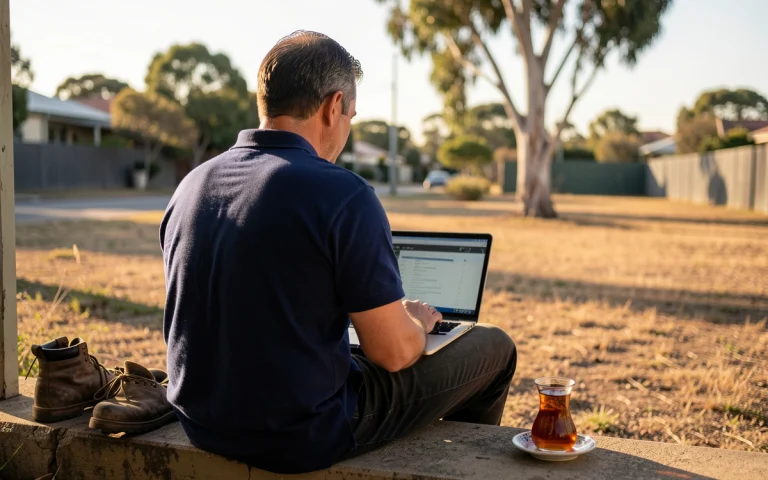
When every ad asks for local experience and applications go unanswered, here's how to protect your mood and confidence while job hunting in Perth.
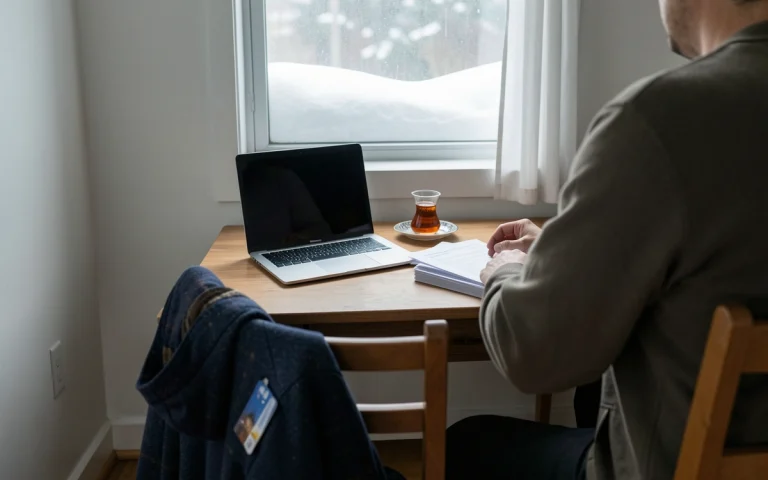
Unanswered applications, "Canadian experience" and survival jobs: how to protect your confidence and mood during a job search in Toronto.

How fly-in fly-out rosters affect sleep, mood and relationships, the warning signs to watch for, and what helps both the worker and the family at home in Perth.