
Not Seeing Family for Years Because of Visa Rules: Living With the Distance
Not seeing family for years because of visa limits is a real form of grief. Here is why it weighs so much and how to stay connected from afar.
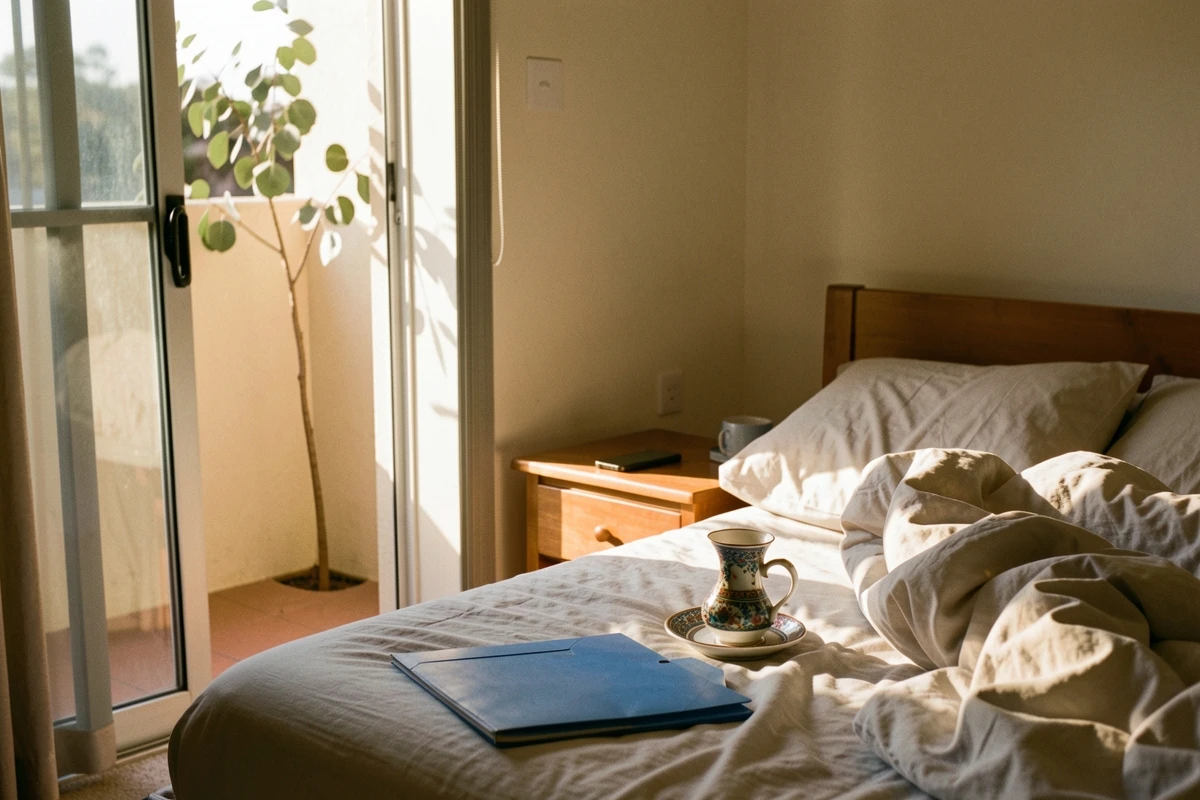
It's seven in the morning and you haven't left bed yet. You open ImmiAccount, check your application, and see the same status as yesterday: still being processed. Then you scroll a migration group to see whether anyone who lodged around the same time has heard back. Waiting for PR Australia anxiety often looks exactly like this: a daily ritual, a life running on a temporary or bridging visa, and the big decisions parked on a desk somewhere in a government office. This piece isn't legal advice; that's the job of a registered migration agent or lawyer. It's about what to do with your mind and your days while you wait.
People cope better with a clear answer, even a bad one, than with "we don't know yet." A bad answer can be grieved and planned around. Uncertainty keeps the mind busy: it runs scenarios, calculates odds, and reads every rumour as a sign.
The Australian pathway often stacks several waits on top of each other. You may wait for an invitation or state nomination, then for your application to be assessed, and somewhere along the way your current visa turns into a bridging visa. Each stage starts a new countdown with no clear end date. Sometimes policies or priorities shift, and it feels like someone moved the finish line while you were running.
There is another layer. Your part of the work is mostly done. You collected documents, sat the English test, got your skills assessed and filled in every form. Now the decision sits with a system you can't see or talk to. For people used to solving problems by working harder, that loss of control can hurt more than the waiting itself.
A bridging visa lets you stay while your application is decided, but it brings a strong sense of living on hold. Depending on the visa and your situation, travelling outside Australia may be restricted or need separate permission. So your sister's wedding, your father's seventieth birthday, or Nowruz (the Persian New Year in March, the biggest family gathering of the year) gets watched through a phone screen.
Australia is several hours ahead of Tehran. When the family is gathered around the Nowruz table, you may be awake well past midnight so you don't miss the video call. The distance isn't only geographic. The quiet thought of "if something happens, I can't get there quickly" sits in the background and makes the waiting heavier.
Meanwhile, Australia doesn't fully feel like yours either. Some jobs, support or long-term plans may depend on permanent residency. That in-between state has its own kind of tiredness: your feet are here, but the ground hasn't set yet.
Some worry is normal. But if several of these sound familiar, the wait may be taking more space than it deserves:
None of this means you're weak. It means your nervous system has been on alert for a long time. If the anxiety has spread into other parts of life, our piece on anxiety after immigration may help too.
You don't have to like uncertainty. The goal is to shrink how much of your day it takes. A few simple habits make a real difference.
If you tell yourself "I'll never check again," you'll probably check ten times in two days. Pick a fixed time instead, say twice a week after dinner. Mute notifications from migration groups. Real news usually arrives by email or through your agent, not in the hundred-and-fortieth message of a busy group chat.
Draw two columns on a page: things I can influence, and things I can't. Up-to-date documents, visa expiry dates and questions for your agent go in the first. Processing times, policy changes and queue order go in the second. When your mind starts looping, ask which column the thought belongs to. If it's the second, just name it: "I'm worrying about something that isn't in my hands again."
Some decisions really do depend on your visa, and those are worth discussing with your agent. Many don't: exercise, learning a skill, a new friendship, a plant for the balcony, a weekend trip to the beach or a national park nearby. These things say your life matters now, not only after an email arrives.
If travel is hard for now, don't leave the relationship to chance. Set a regular weekly call that works with the time difference on both sides. Mark the occasions you miss in small ways: a small Nowruz table in your flat, cooking the dish your mum makes that day, or a long voice message instead of a two-word text. Our article on missing family after immigration has more ideas.
If you're on this path with a partner, you probably cope in different ways. One wants to talk about it constantly; the other would rather not mention it. One blames ("if only we'd picked that other state"), the other feels guilty. Different styles are normal, but left unspoken they turn into fights.
A simple agreement helps: once a week, for half an hour, talk about the application and your worries, and keep the rest of the week off-limits. Dinner and weekends aren't for visa talk. If imagining the worst case calms you, write a backup plan together. Knowing the next step if the answer is no takes some weight off the fear.
If your sleep, focus or appetite have been off for weeks, if you're falling behind at work or study, or if nothing feels enjoyable anymore, the waiting for PR Australia anxiety has gone past the usual level and it's worth talking to a professional. You don't need to wait until things get really bad.
In Australia the usual first step is a GP, who may be able to refer you, depending on your visa and cover. Many Iranians, though, want to talk about the fear of not being able to go home, missing their parents and family pressure in their first language. That's why online sessions with a Farsi-speaking psychologist for Iranians in Australia make sense for many people. Our therapists are based in Iran and all sessions are online, scheduled around your time zone. You can read about Dr. Meysam Nikdanesh and his approach, or start with a pre-consultation so you're matched with the right therapist.
If you have thoughts of harming yourself, don't wait for any appointment. Call emergency services in Australia on 000 right now.
Your application is part of your life, not all of it. The days you spend waiting are real days, and they won't be handed back later. The more of today you can take back from the file, the more ready you'll be when the answer comes, whatever it is.
Yes. Long uncertainty keeps the nervous system on alert, and tiredness, poor sleep and irritability are common during it.
Usually not. Each check brings brief relief but feeds the anxiety. A fixed checking time works better.
No. Legal questions belong with a registered migration agent or lawyer. A psychologist helps you cope with the stress of this period.
Yes. Sessions can be scheduled to fit your working hours and daily life in Australia.

NikMind Editorial Team
Articles here are for general information and do not replace an assessment session with a psychologist or psychiatrist

Not seeing family for years because of visa limits is a real form of grief. Here is why it weighs so much and how to stay connected from afar.
Berlin is full of people, yet friendships often come and go quickly. Why loneliness in this city feels different, and what actually helps.

When your status depends on your job, a layoff is more than losing work. This guide helps you get through the first weeks with a steadier mind.