
Not Seeing Family for Years Because of Visa Rules: Living With the Distance
Not seeing family for years because of visa limits is a real form of grief. Here is why it weighs so much and how to stay connected from afar.
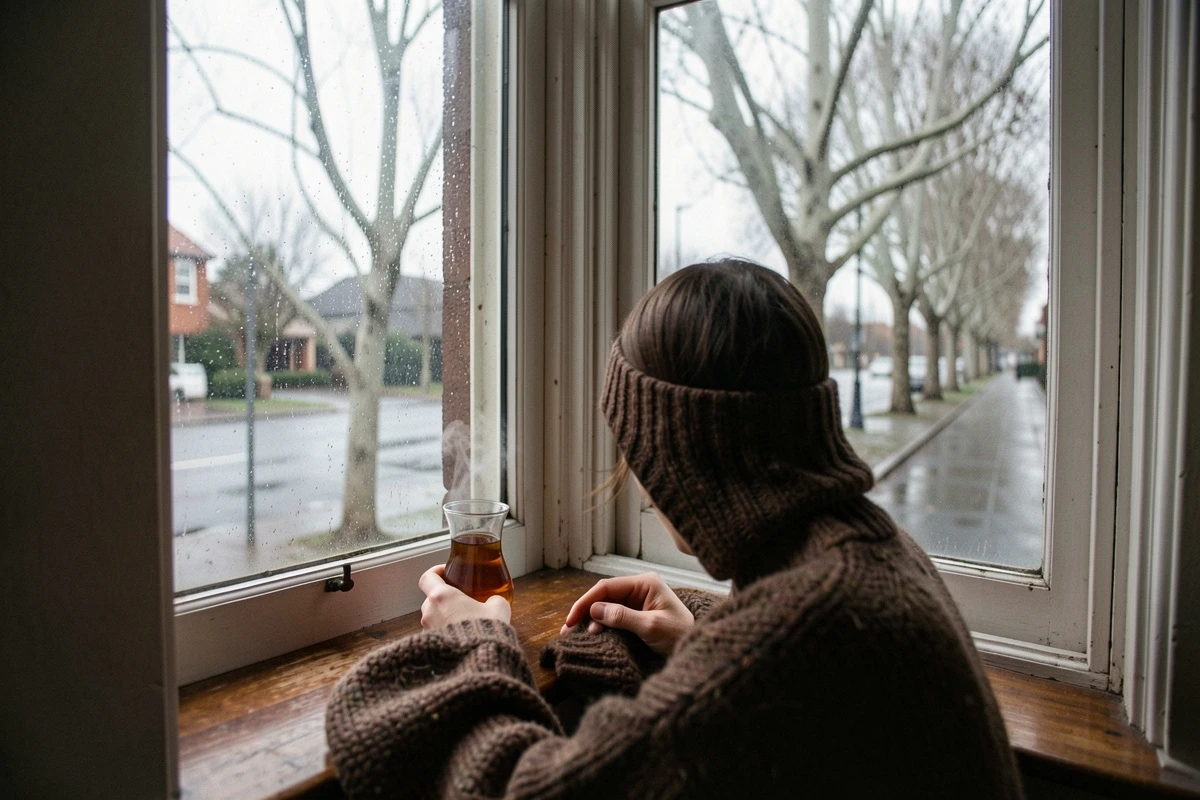
Picture your first winter in Melbourne. In June, when Tehran is heating up for summer, the sky here turns grey and cold. It gets light late, it is dark before you leave work, and a chilly draught finds its way through the gaps in your rental's windows. One day you realise you have no energy for anything and you are not sure why. The winter blues Melbourne newcomers talk about are real, and they are common. This article looks at where that low mood comes from, how it differs from depression, and how a simple routine of light, movement and people can make the cold months easier.
Melbourne's winter is not harsh compared with Canada or northern Europe. Snow in the city itself is rare and temperatures usually stay mild. What wears people down is the combination: overcast skies, steady drizzle, cold wind and short days. You can go weeks without seeing proper sunshine.
The city is famous for having four seasons in one day. You leave home in sunshine and get caught in cold rain at lunchtime. That unpredictability sounds minor, but when it keeps disrupting your plans it chips away at your sense of control, and staying home starts to feel easier.
Housing plays a part too. Many older homes and rentals are poorly insulated and hard to keep warm. If you grew up in Iran with well-heated homes, a cold living room can be a surprise. People spend more time under blankets, go out less, and get less daylight.
For Iranians there is another layer. Nowruz, the Persian New Year that marks the start of spring back home, falls in autumn here. Yalda, the Persian celebration of the longest night of the year, lands on one of Melbourne's shortest nights. And just when your family in Tehran is complaining about the summer heat, you are in the cold and dark. A video call with your mum sitting in a sunny yard can make you miss home even more. For years your mind has tied seasons to memories and rituals, and now everything has shifted.
The difference matters because it changes what kind of help makes sense. The winter blues usually mean lower energy, a stronger pull towards sleep and comfort food, and a flatter mood. You can still go to work, laugh with friends and enjoy a sunny day. This usually lifts as the days get longer.
Some people go through something more serious in the same season each year, known as seasonal affective disorder (SAD). It is a form of depression with a seasonal pattern. The difference is that it seriously affects daily life: work, study and relationships suffer, and sadness or hopelessness is there most days.
Signs worth taking seriously:
This list is not a diagnosis. It simply helps you know when to speak to a professional. If you moved recently, part of what you feel may come from the big changes in your life, not just the weather. If you are studying here, our article on international student stress in Melbourne covers that side.
Your body relies on daylight to set its internal clock and regulate sleep. Even on a cloudy day, outdoor light is far brighter than indoor light. So the simplest step is to catch morning light.
Some people also use light therapy lamps. If you are thinking about one, check with your GP first, particularly if you have eye problems or take medication.
In winter the body wants to move less, and that inactivity pulls mood down further. You do not need to become an athlete. The aim is to move a little every day, ideally outside and in daylight.
A thirty-minute walk along the river or through your local park, even with an umbrella, often does more for your mood than an hour of exercise in a dark flat. When the rain is heavy, a group class at a gym or an indoor pool gives you two benefits at once: movement and other people.
Choose small, steady habits over big resolutions. "I walk for ten minutes after lunch" lasts much longer than "From tomorrow I go to the gym every day."
It is natural to stay in more during winter, but isolation and darkness are a bad combination. If you do not have close friends in Melbourne yet, winter is a good time to build small social routines.
It also helps to give winter a meaning of your own. Fill the long evenings with small rituals: a weekly film night, slow-cooked home food, reading with a glass of tea. When winter has something to look forward to, it feels less like a dark tunnel.
If the signs above have lasted more than two weeks, or they come back every winter, it is time to get support. In Australia the usual first step is your GP, who can assess how you are doing and refer you to a psychologist or psychiatrist if needed. How much is covered depends on your situation and your insurance.
If you would rather talk in Farsi, with someone who understands what an upside-down winter and an autumn Nowruz feel like, online therapy is a good option. Our page on Farsi-speaking therapy for people in Melbourne explains your options, and Iranian psychologist in Australia covers getting help across the country. NikMind's therapists are based in Iran and all sessions are online. You can browse our Farsi-speaking therapists or start with a pre-consultation so we can match you with the right person.
If you are feeling so low that you have thoughts of harming yourself, do not wait: call 000 now or go to your nearest emergency department.
Melbourne's winter ends and the days grow long again. Until then, a little light, a little movement and a few good people can make a real difference.
Not always. The winter blues are usually mild and do not disrupt daily life. If you have felt low most days for more than two weeks and it is affecting work or relationships, talk to a professional.
Yes. Outdoor light on a cloudy day is still much brighter than indoor light, and it helps regulate sleep and energy.
Some people find it helpful, but check with your GP first, especially if you have eye problems or take medication.
Yes. NikMind sessions are online, and with the Melbourne to Tehran time difference a suitable time can usually be found.

NikMind Editorial Team
Articles here are for general information and do not replace an assessment session with a psychologist or psychiatrist

Not seeing family for years because of visa limits is a real form of grief. Here is why it weighs so much and how to stay connected from afar.
When you've spent months on a temporary or bridging visa, here is how to take your days back from the application.
Berlin is full of people, yet friendships often come and go quickly. Why loneliness in this city feels different, and what actually helps.