
Iranian Couples Counselling Sydney: When the Cost of Living Gets Between You
Rent pressure, shifting roles and the same argument every week: where conflict comes from for Iranian couples in Sydney, and when to get help.

It's Friday night at a friend's house. You haven't even taken your coat off when someone asks, "Did you buy yet, or are you still renting?" Then the talk moves to whose kids got into which university, someone's new car, someone else's summer trip. On the drive home, stuck on the freeway, you're quiet and feel behind everyone. If that sounds familiar, you're not alone. The pressure in the Persian community Los Angeles is home to is something many people feel and few talk about openly. This article looks at where that pressure comes from, what it does to self-esteem and family life, and how to step back from it without cutting yourself off from your own people.
Comparison isn't unique to one city or culture. But in LA a few things come together that make it louder.
The Iranian community in Southern California is large and long-established, yet the web of connections is tight. The person you met at a party is your sister's coworker's cousin, and news about your job, your house or your divorce can reach the group before you do. That closeness is comforting, but it can also make you feel watched.
Many families arrived after hard times and started from zero. For some, a house, a car and the kids' careers aren't just parts of life; they're the answer to "Was it worth it?" When success carries that much weight, a simple question at a party can feel like an exam.
If you arrived a few years ago, you're often sitting beside people who came decades earlier and are fully settled. Comparing yourself to them without counting that time gap is unfair. But the mind rarely does that math; it only sees results.
The party ends, but the comparison doesn't. Vacation photos, graduations, a new house. Everyone posts their best moments, and you hold them up against your ordinary days.
A bit of comparison is human and can even motivate you. The trouble starts when it becomes the main measure of your worth. Then a few things tend to happen:
That hidden shame may be the heaviest part. People live surrounded by familiar faces yet have no one they can talk to without the mask.
Comparison often passes from parents to children. College admissions, a "respectable" major, grades and tutoring are standard party topics. A child raised in the US can get stuck between two worlds: classmates talk about passion and choice, while family talks about how so-and-so's son got into medicine.
The pressure isn't always spoken. Sometimes it's just a parent's face in a moment of comparison, and kids notice. Some teens respond by pushing nonstop; others by pulling back and losing motivation. If your relationship with your child revolves more around results than around them, it's worth pausing. Asking "What do you want?" and really hearing the answer, even if it isn't what you hoped, does more than any advice.
Plenty of people say they love Iranian get-togethers but feel exhausted afterwards. That's not a contradiction. The same group that shares your language, food and humor can also bring personal questions, intense taarof (the elaborate Persian ritual of politeness and polite insistence) and quiet comparison.
Try asking yourself after each gathering: "Do I feel lighter or heavier?" If the answer is usually heavier, the problem probably isn't you. That group, or that kind of event, may simply not meet your needs anymore.
The answer isn't necessarily leaving the community. Many people try that and then face a new kind of loneliness. The goal is to choose how close you stay, and how.
If comparison is no longer a passing feeling and is affecting your sleep, work, spending or relationship, talking to a professional can help. That matters most if you notice ongoing worthlessness, constant worry, or withdrawing from everyone.
LA has Farsi-speaking therapists, and local in-person care is a good option, especially if you need a psychiatrist or want to work through your insurance. For some people, though, that closeness is the problem: the worry of running into their therapist, or the receptionist, at a party. Online sessions with a therapist outside your social circle can ease that concern. Our city page has more on options for Iranians living in Los Angeles.
Our therapists are based in Iran and sessions are online, in Farsi. You can meet our Farsi-speaking therapists, or if you're not sure where to start, book a pre-consultation and we'll find the right path together.
If you're having thoughts of harming yourself, don't wait: call 911 now.
The Iranian community in LA can be a real source of warmth and support. The aim isn't to run from it. It's to find a place in it where you can be yourself.
Yes, everyone compares to some degree. It becomes a problem when your mood and decisions depend more on other people's view than on your own values.
Have a short, calm answer ready, then change the subject. You don't need to explain yourself or prove anything.
Not necessarily. Cutting off completely can bring loneliness. It usually works better to keep the gatherings that leave you feeling good and reduce the rest.
In a community where everyone knows everyone, some people worry about being seen at a clinic or bumping into their therapist socially. A therapist outside their circle reduces that worry.

NikMind Editorial Team
Articles here are for general information and do not replace an assessment session with a psychologist or psychiatrist

Rent pressure, shifting roles and the same argument every week: where conflict comes from for Iranian couples in Sydney, and when to get help.

How fly-in fly-out rosters affect sleep, mood and relationships, the warning signs to watch for, and what helps both the worker and the family at home in Perth.
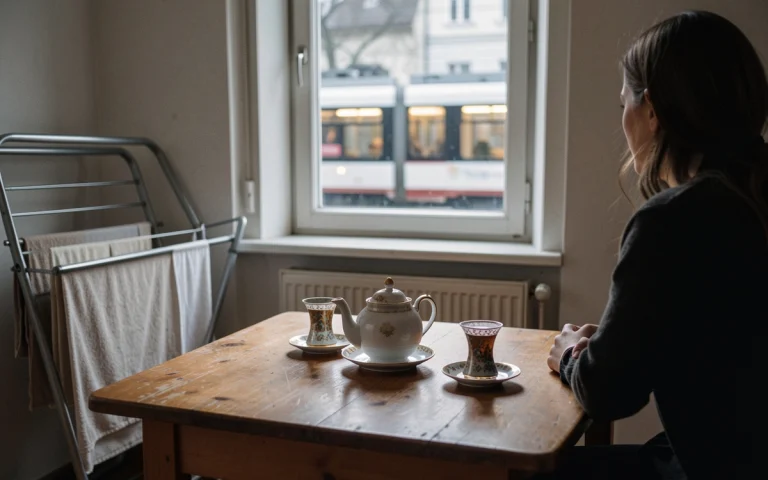
How a new language, an uneven start and loneliness for two affect Iranian couples in Germany, and when it is time for counseling.